Responsibly Engineered—
Reaching where we are now
with complete responsibility, and into the future.
Toray International, Inc.
3DeFX+Ⓡ was first released in 2013.
As an innovative new genre of technology, it has garnered much attention and spread steadily around the world.
We spoke with two people who have been involved with 3DeFX+Ⓡ about its still ever-growing potential and prospects.
Joined Toray Industries, Inc. in 1991. As the Manager of the Uniform & Overseas Project Dept., Overseas Project Sect., of Toray International, Inc., Igarashi has worked on 3DeFX+Ⓡ since its launch, and currently he handles approaching potential clients, sourcing suppliers, and investments into sewing factories. In April 2026, he was appointed General Manager of the Apparel Business Planning & Management Dept. Igarashi was who gave 3DeFX+Ⓡ its name.
Joined Toray Industries, Inc. in 2008, and supported the launch of 3DeFX+Ⓡ as Sales Manager at the Uniform & Overseas Project Dept., Overseas Project Sect., of Toray International, Inc. under Igarashi in 2013. Since then, Fujimoto has been involved in marketing and sales for 3DeFX+Ⓡ while working with local subsidiaries in the United States and Hong Kong.
The determination to evolve embodied in the "+" sign.
Igarashi: It's already been over a decade since 3DeFX+Ⓡ first came out. When it was released to markets in 2013, we created a new genre called "active insulation wear" that incorporates stretchability, heat retention, and breathability. I was proud of that, and now I feel that it is definitely gaining traction.
Fujimoto: In the beginning, the technology was recognized in extreme outdoor sports such as hunting and skiing, the so-called 'upper echelons,' and was supported by American apparel manufacturers in particular. It then started to spread in Japan, almost like it was re-imported. As its quality has been recognised more and more, it has come to be increasingly adopted for use in everyday clothing.
Igarashi: 3DeFX+Ⓡ itself has evolved with the times, too. Now we have new variations including HT, which specializes in warmth; WR with its excellent water repellency; and FB that achieves fiberball-esque levels of down fill power through the use of sheet cotton.
Fujimoto: Mr. Igarashi, you gave 3DeFX+Ⓡ its name, and our idea of continuing to evolve is embodied in the "+" sign. Like Google, Toray releases beta versions of its products while gathering user feedback in order to evolve its products and services. We wanted to create a brand where the launch doesn't mean the end, but instead marks the start. That thought remains unchanged and is alive in 3DeFX+Ⓡ.
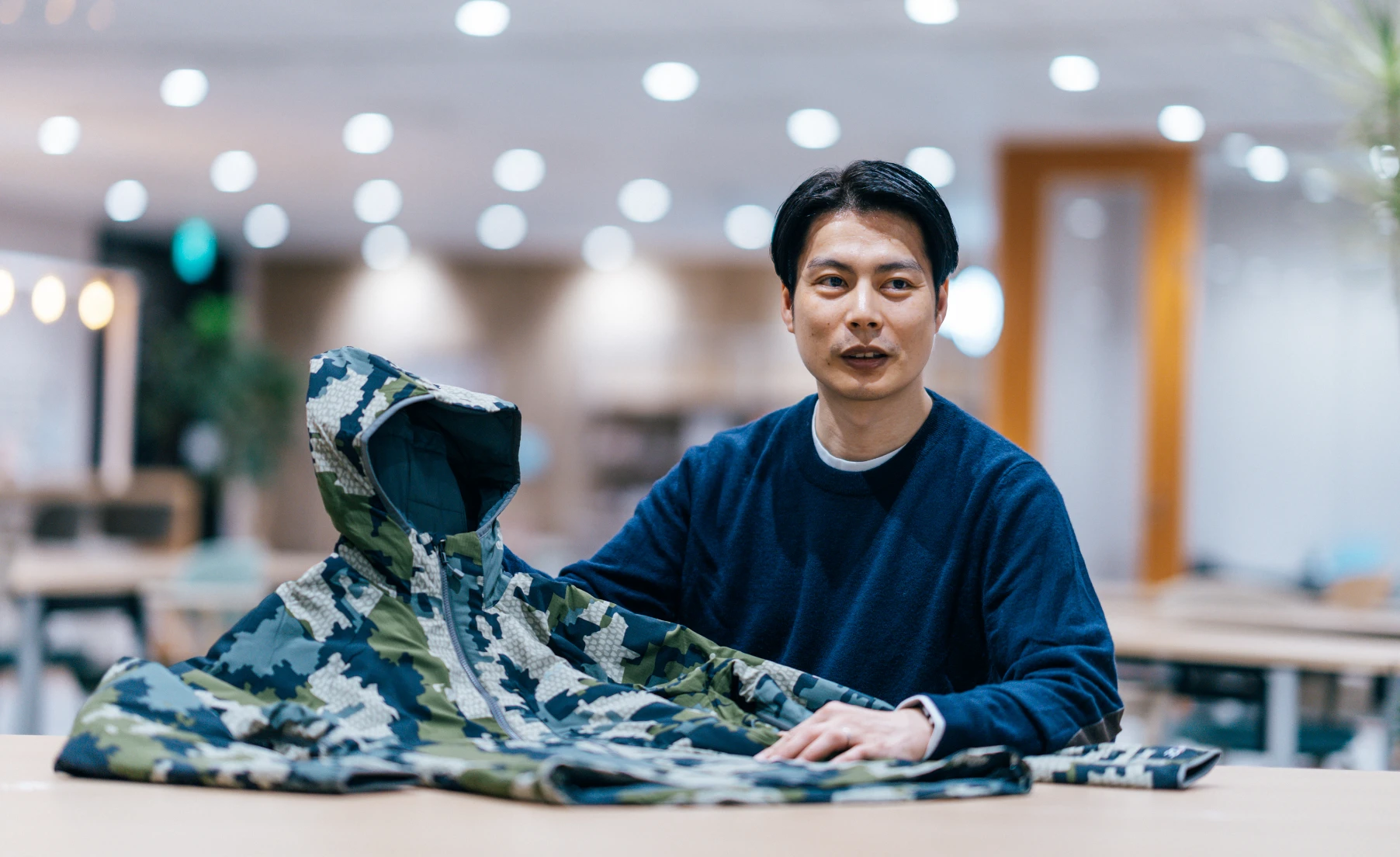
Be open. Be sustainable.
Fujimoto: Our current challenge is how to directly appeal to consumers. 3DeFX+Ⓡ has gradually established its presence among apparel manufacturers as an insulation garment brand. On the other hand, the reality is that consumer awareness remains low. The demand for 3DeFX+Ⓡ among consumers growing so large that it is reaching apparel manufacturers— that's a future I want to make into a reality.
Igarashi: And for that purpose, a new marketing team has been formed. We have started to develop promotional initiatives that will surely reach consumers, such as videos presenting 3DeFX+Ⓡ with universal appeal.
Fujimoto: We have a mission, which we launched in 2021 in the sewing products business for the US and European markets, called 'Responsibly Engineered (RE).' I feel that RE will be the core of how we promote the brand going forward. "RE" can mean "manufacturing responsibly" if you interpret it literally, but there's a really important idea imbued in it. 3DeFX+Ⓡ is not just a component used only for insulation, it is a garment in itself—in other words, it is a brand of finished clothing. From design to sewing, we are the ones responsible for creating products that can optimize insulation performance to its utmost.
Igarashi: The technology may have first been accepted by the United States because it is the country that has Apple and Tesla. It was easy for them to understand the vertical management style, handling the individual component parts up to the completed end product. Of course, there were many requests asking us to sell just the insulation, but we have, fundamentally, rejected this. For us, it was much more important to make responsible, consistent products and maintain the highest quality possible, rather than focusing on short-term contracts.
Fujimoto: We did lose some business opportunities, but the benefits easily outstripped them. For example, we were able to have much more in-depth conversations with customers who had adopted 3DeFX+Ⓡ. Compared to simply providing just the materials, our shared points of contact with our customers have increased overwhelmingly, creating more opportunities for us to exchange opinions. Reflecting the opinions of our customer in our products leads to customers feeling that we listen to what they tell us and utilize it properly, and in turn we receive even more comprehensive requests; it's a virtuous cycle. In fact, the evolutionary forms of HT and WR were also inspired by customer feedback. These were open innovations with our customers in a sense.
Fujimoto: RE is also essential to ensuring that 3DeFX+Ⓡ is sustainable. 3DeFX+Ⓡ is manufactured in our own factories and sewing factories owned by our partners that we manage. We began to offer highly complex sewing technology that only we are capable of providing, and, as a result, we are able to deliver garments that can be used for many, many years to come. Sustainability in the apparel industry often focuses solely on the recycling rate of raw materials. We certainly focus on recycling as well, but I believe that being able to use our products for a long time is extremely sustainable at a fundamental level.
Igarashi: We are also going all-out with environmental initiatives at our factories, such as obtaining the Leadership in Energy & Environmental Design (LEED) certification and installing renewable energy. We would like everyone to know about these initiatives, which recycling rate values alone do not measure.
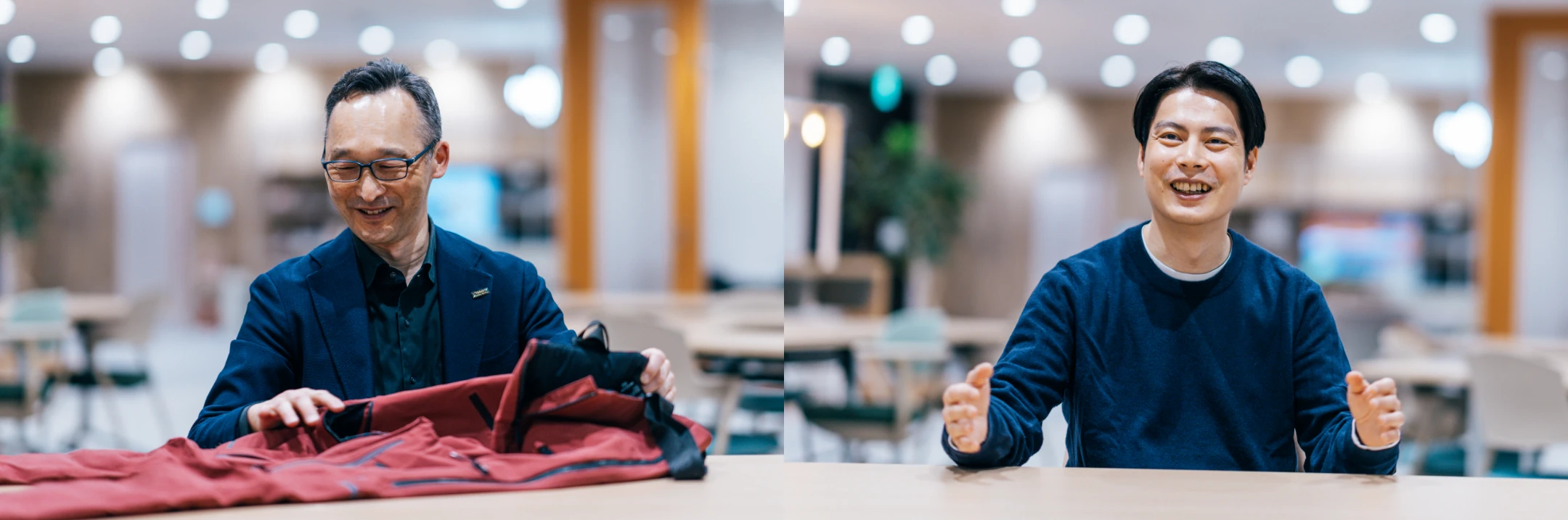
Innovation is itself the essence.
Fujimoto: 3DeFX+Ⓡ will continue to innovate from hereon. However, we don't want to make our future something with a static, fixed format like a roadmap. Rather, we want to leave room for serendipity. The brand's latest model, FB, comes from meetings we had with personnel from an external manufacturing company. It is common sense that the heavier the insulation is, the warmer the garment becomes. However, we found that if the insulation exceeds a certain weight, there's no further increase in warmth. When we were at a dead end, we got in contact with the those personnel from the manufacturing company, who then gave us inspiration for a solution. It took us about two years of trial and error to make the product a commercial reality, but I was thrilled to see how persistent collaboration toward a single goal showcased the underlying strength of Japanese manufacturing. I believe that the solid base of RE can make serendipity fall in our favor and make open innovation possible.
Igarashi: Innovation could become reality only because we were responsible for everything. That policy has remained unchanged since the beginning. But it's easier to tell the story now because RE has been clearly put into words.
Fujimoto: Innovation is the essence of 3DeFX+Ⓡ, be it in the past or future. Together with the Marketing team, we will continue to tell our story through an array of promotional initiatives.